This is the first investment memorandum for a fund managed by Bel Air Asset Management Co., Ltd. since its establishment in 2018. Here, I will first talk about our investment philosophy, then introduce our investment strategy and perspective by analyzing the insurance industry and Ping An Company of China, and finally briefly review our investment experience in the past year. I hope that through this communication, investors can better understand our investment style, recognize our investment methods, agree with our long-term perspective, and at the same time realize our limitations.
According to the compliance requirements of private equity funds, this article will not display the positions and performance of the company's products, but will only serve as an exchange of investment strategies and experiences.
1 Investment philosophy
We believe that long-term sustainable investment relies on focusing on the output of the underlying asset (such as interest, profit, dividends, or rent) rather than the price offered by the next bidder. When investing, I don't consider myself a stock analyst or trader at all. When I buy stocks, I think I am buying part of a business. I will study the operating conditions and business model of this company, I will be interested in its management culture and history, and I will think twice about the price I will pay. But I wouldn't expect to sell it to the next person at such an expensive price. I will not set a sales expectation in my mind, whether it is the expected price or the expected holding time. Many times, I want to hold this business for a very long time. Our investment philosophy also lies in this. We will hold core assets for a long time, grow together with the company, and stand together through thick and thin.
When selecting these core assets, we will pay attention to all aspects of the enterprise. Although there are no specific quantitative indicators (accurate errors are not as accurate as vague correctness), the following three dimensions are our focus on inspection.
1 Margin of safety
Why put the margin of safety first? Because the margin of safety is the cornerstone of our practical value investment. If there is no good price, we would rather miss out on no matter how good the value is, because fundamentally, under the premise of unpredictable the future, the price is known, and the value contains a lot of unknowns. We firmly believe that only with caution can we sail for thousands of years.
For people who view buying stocks as part of a company, to some extent, good prices can be considered the most important reason for buying part of the company through the secondary market. Let me explain by simply comparing the good and bad results of buying a company's equity in the primary market and the secondary market.
(1) Characteristics of primary market purchases (this also includes tender offers in secondary market)
Taking into account the high proportion of shareholding, compared with holding shares of secondary market companies, which can only passively earn approximately 1%-4% dividends every year (based on current market conditions and dividend ratio), investors can increase the annual cash income from the company by influencing the company's capital allocation. If holding is formed, we can directly bypass some of the most difficult issues (mainly agent issues) involved in the third dimension (management's investment and resource allocation capabilities) we will discuss next. From then on, you no longer have to worry about unreliable managers desperate to carry out expensive and extremely low-return mergers and acquisitions for higher EPS (driven by many third-party helpers, these mergers and acquisitions may appear charming and valuable in ppt, and their expected returns always show a very beautiful slope), or letting a large amount of money lie in the bank and enjoy low interest rates for inexplicable reasons. It also means that you have more extra cash flow every year. After meeting the company's basic business needs and expanding fixed investment in reproduction, all the remaining profits can be used for dividends (for example, some companies whose ROE is stable at 15% can often reach a cash dividend of 10-12% based on net assets). These endless dividends create ammunition that allows you to continue to buy other high-quality assets, especially at the bottom of the market when cash flow is at its most scarce. In fact, this has been Buffett's main investment and business model for a long time.
The disadvantages of primary market purchase are mainly reflected in the higher costs. Your counterparties are usually insiders, such as company executives or other institutional investors. These people usually have an information advantage and have strong bargaining power (compared to individual investors in the secondary market). In addition, the liquidity of their primary market is poor. Without a market price in the secondary market as a reference, the final transaction price may not be ideal.
(2) Characteristics of secondary market purchases
Due to its special environment and participating groups, the secondary market often allows high-quality companies to trade at unimaginable low prices (much lower than the prices negotiated between institutions). Let's take a look at how prices in the secondary market are formed.
First of all, the definition in the textbook is given. According to the currently widely popular efficient market theory, the market represents all participants, and the price on the market reflects all relevant and available information. But is this really the case? A long-term investor like Buffett has in-depth research on the value of the company, but has hardly participated in market transactions during the more than 30 years he has owned Coca-Cola. How does the market respond to his insights into the value of the company? Friends who have been traders or speculators know that market prices are only determined by the most active buyers and sellers at the moment. Taleb talked about in his "Asymmetric Risk",
Just because of a certain behavior by the seller, the market price can instantly drop by 10%. In fact, as long as there is such a stubborn seller, this situation can happen, and the degree of reaction of the market is not proportional to the intensity of the stimulus it receives. The total market value of global stock markets is about US$30 trillion, but in 2008, only US$50 billion in transactions, less than two-thousandth of the total market value, caused the market value of global stocks to drop by 10%, resulting in losses of US$3 trillion.
Looking at the A-share market, some tested companies, such as Midea Group and Ping An of China, have once traded at ridiculously low prices in the market. Using a popular indicator, their price is only eight times net profit over the past twelve months (if you don't agree that the long-term value of these companies should be determined by these 12,000 traders, then you could have made a big bargain in the secondary market). But if you want to acquire a company similar to them in the primary or secondary market for the same price, it is almost impossible.
Therefore, if you plan to buy a company's equity in the secondary market, but don't care about its price and the margin of safety you can have, it's like taking a gun with a bayonet to the battlefield. You could have safely hidden in the distance and shot the enemy's head. However, you are infected by the bloody scene of enemies fighting each other in the market, and rush into the scuffle and fight the bayonet regardless of everything.
2 Long-term competitive advantages
With long-term competitive advantages, you can withstand opponents 'attacks in the next few years and continue to generate cash flow. By holding such enterprises for a long time, compound value growth can be achieved stably and safely over a long period of time. We believe that there are usually two types of long-term competitive advantages of a company. One comes from the natural or accumulated moat, such as the brand effect of McDonald's, the network effect of Facebook and WeChat, the conversion cost effect of Microsoft WINDOWS, etc. The second long-term competitive advantage comes from excellent management. These companies operate in industries with many competitors and the intensity of competition is not low. However, through endless attacks on costs and excellent management, the company can also operate well for a long time. Examples include Wal-Mart, Costco, and GEICO insurance. Financially, both the first and second types of companies typically demonstrate stable and good cash flow and capital returns over a long historical horizon, such as the past 10 years.
These companies are easy to say, but difficult to find, and most great companies are known only after the fact. And even if you have long-term competitive advantages, you will often encounter challenges. The rise of the mobile Internet, changes in consumer hotspots, changes in industry regulations or systems, the influx of overseas brands and forces, etc. may all change the rules of the game. So when we think about the company and the industry, in addition to looking at the data of the past 10 years, we will also think about whether consumers will still use the company's products or services in the next 10 years, whether the company's brand will still be desired by people, and whether the company's management can pay the same attention to cost control and focus on developing the main business as it is today.
3 Management's capital allocation (investment) capabilities
In addition to developing its main business efficiently and intensively, how to allocate the cash flow generated from operating activities is equally important. Many talents are promoted to the top because they perform well in their own professional fields, such as design, R & D, production or marketing. However, we are now raising expectations for capital allocation for him and his management team, which seems a bit unsatisfactory. Just like a chef who has just been promoted to a Michelin restaurant, investors thanked him for his years of hard work and told him, I hope you can become a great fund manager next. This is probably the most stringent requirement in our investment philosophy, but it is the key to slowly rolling our snowball.
Here is a simple example to illustrate it from a mathematical perspective. Suppose there are two companies, Enterprise A and Enterprise B, both worth 100 million at the beginning, and both earn the same 15% every year, and neither retains all profits without dividends. The manager of Enterprise A puts the profits in the bank and earns 3% interest. The manager of Enterprise B invests part of the profits into its main business to expand production and other part of it invests other projects or mergers and acquisitions, and the return on investment is also 15%. Thirty years later, the value of Enterprise A reached 800 million, while the value of Enterprise B reached 6.6 billion. If you think this gap is not exaggerated enough, then let's look at 50 years later, the company value of Enterprise A has reached 1.8 billion, while the company value of Enterprise B has reached 108.4 billion. One has become a billion company, while the other has become a billion company.
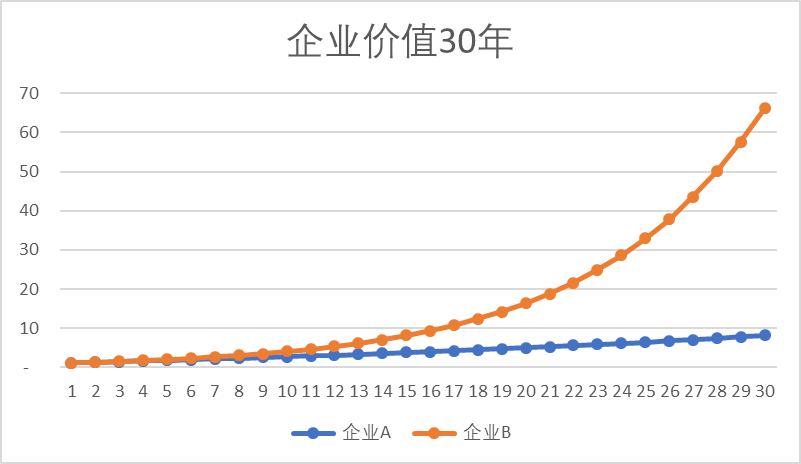
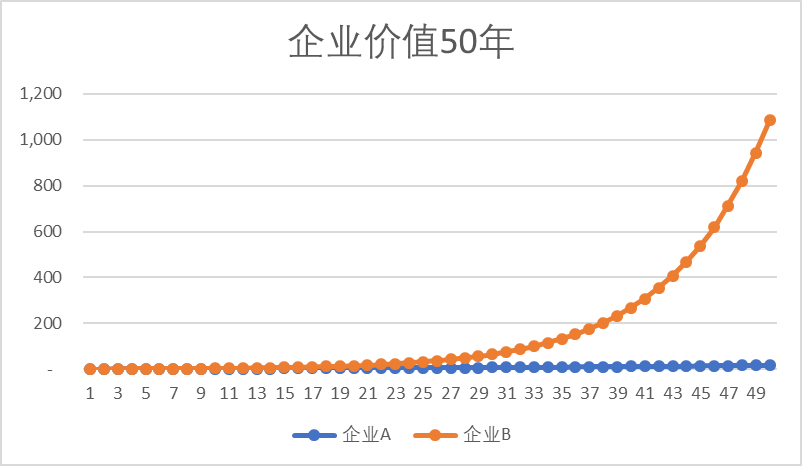
In fact, the problem of Enterprise A is easy to solve. Using the unused profits deposited in the bank to buy back your own company's shares can greatly increase the overall rate of return. Of course, dividends can also be used to allow investors who receive dividends to find other good investment opportunities in the market. See's Candy is a good example. Its main business has continued to grow steadily for a long time. By distributing cash flow dividends, it has created greater value for investors. However, the solution to the problem is easy and there are many successful cases, but whether management adopts it may be the root of the problem. If we see that management like Company A tends to retain all or most of its profits, we have to carefully examine the subsequent value and benefits of these profits. Of course, there are also successful cases of this approach, such as Tencent and Capital Radio. Among them, Capital Broadcasting Corporation adopted a division of labor model, with COO Burke fully responsible for the daily operations of the company, while CEO Murphy focused on acquisitions and capital allocation and achieved great success.
On the issue of profit distribution, we can also detect whether corporate management puts shareholders 'interests first. Here we don't want to dictate corporate management, but we just want to find management whose philosophy is consistent with ours. This can usually be better judged by reviewing the company's history of acquisitions, dividends, buybacks, and refinancing. Our ideal management is both managers and investors, and they believe that the interests of shareholders are their own interests. If they can demonstrate several or more of the characteristics listed below, then this management should have good capital allocation capabilities.
They attach great importance to the cash flow of the company's main business (without good cash flow, how can we get the capital for continued expansion and acquisitions).
Their obsession with cash flow also gives them the targets or projects they invest in, which greatly improves the margin of safety of the company's investment and mergers and acquisitions.
They only invest in what they know, so that they are more confident that they can continue to make the cake bigger. (Many of the drastic mergers and acquisitions across industries and fields failed to achieve the expected integration effect. Managers who track market hotspots for investment are often miserable because of the congestion of competitors.)
They are keen to buy back shares of their own companies. After all, my own company is the one I know and am most sure of. Doing so can not only directly increase the return on net assets and earnings per share, but also avoid the low return caused by too much cash.
The above three dimensions can be summarized in one sentence: buy good companies at cheap prices. When we encounter such opportunities, we will buy in large quantities and hold them for a long time. In fact, very few companies can meet all three dimensions at the same time in a given time. Most companies that satisfy the second and third dimensions are often intimidating in the first dimension. Fortunately, we are a little patient, and we tend to put our funds in the cash parking lot at times like this (reverse repo, money funds or highly undervalued companies with stable performance).
The following is an introduction to China Ping An Company and the insurance industry in which it is located, which have been relatively satisfactory in the above three dimensions in the past year.
2. Insurance industry and Ping An of China
1 Why are you optimistic about the insurance industry
Insurance has a unique business model. Among many industries, it belongs to the very small group that can collect cash first and then provide products and services (friends who do engineering may understand what a huge advantage this is). Moreover, spending on their products and services often takes several years to come. Because the products and services they provide are ultra-long-term or lifelong in nature, they are inherently given a ultra-long-term perspective, and they all tend to pursue sustainable development. This long-term perspective is undoubtedly very consistent with our investment philosophy.
From a macro perspective, the insurance industry has broad development prospects. First of all, internationally, by comparing the development of domestic and foreign insurance industries horizontally and vertically, we find that there is still considerable room for China's life insurance industry. Although China is currently the world's second largest insurance market, China's insurance depth (premium income as a proportion of the region's GDP) and insurance density (premium income/total population) are still at low levels, which are only equivalent to 66% and 52% of the world average (even lower if compared with Europe). Secondly, in the Asian region, we can see that because they are relatively conservative and focus on protection, the insurance depth of developed Asian economies is always higher than that of Europe, the United States and the world. Japan's per capita GDP level is about US$10000/disposable income of US$8000, and the Engel's coefficient has dropped from close to 0.3 to 0.25, and the insurance depth has increased rapidly. The level, density and depth of insurance in Asian regions such as Hong Kong and Taiwan are much higher (for some special reasons, no comparison is made here). Historical experience shows that residents 'demand for insurance will increase with the increase of per capita GDP, disposable income and expenditure on non-essential items.
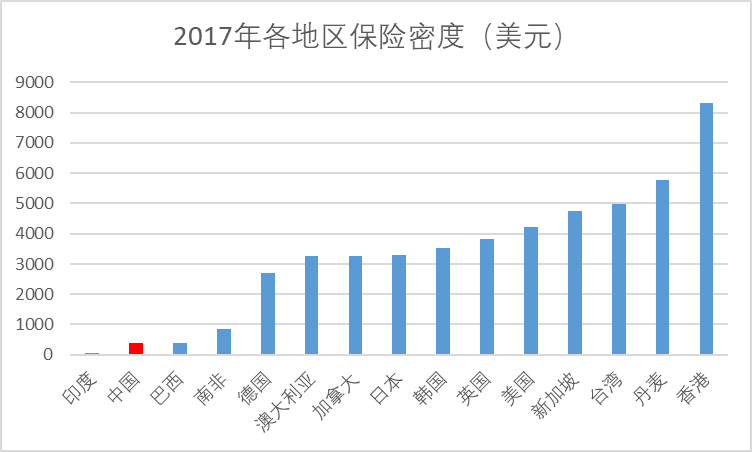
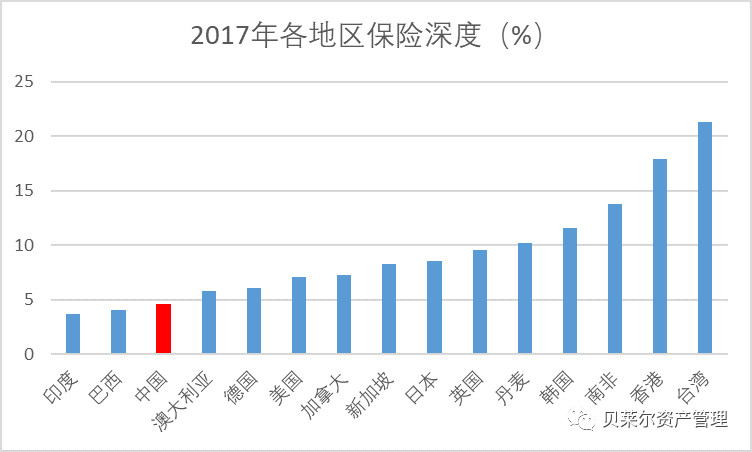
At the micro level, the defense and defense of insurance companies (the insurance companies mentioned here are comprehensive insurance companies that include both life insurance and property insurance) are natural. Insurance companies 'product composition includes both consumer necessities (defense) and consumer optional products (offense). Among the many products of insurance companies, property insurance, such as auto insurance, accident insurance, etc., provides good defense performance (you still have to buy auto insurance obediently when the financial crisis comes). Life insurance products that are biased towards emotional consumption have brought a strong offensive nature along with economic growth and the improvement of insurance awareness. When the economy is bad, the surrender rate of life insurance products will increase, but most customers who use regular payments will continue to take out insurance (unless they have to, who would be willing to give up a life insurance policy that has been paid for for several years? This is completely different from the mortgage default in the real estate crisis. Except for some specific insurances, the value of life insurance contracts will not decrease significantly like the house.) Please don't underestimate the defensive nature of these fixed cash flows. After the market experienced a sharp decline, they provided precious ammunition for insurance companies to buy high-quality assets at the bottom. These cash flows also bring an obligation for insurance companies to continue to invest, which allows them to continue to buy despite pressure in panic (of course, some insurance companies may buy less). This was really a timely help. You know that at that time, real companies were busy cutting salaries, layoffs and expenses, and financial companies were busy explaining to customers why their net worth had shrunk significantly. There were not many people or institutions in the market who were both willing and capable to go to the bottom.
2 Risks and challenges for insurance companies
After hearing so many benefits and advantages of insurance, it may easily make people feel the urge to buy everything they want. Now let me pour cold water on it to cool down. In a speech delivered by Charlie Munger, vice chairman of Berkshire Hathaway, he mentioned such a story. I moved it up here intact,
The last medicine I prescribed to make you live a chaotic and painful life is to ignore the countryman story that people told me when I was a child. A countryman once said: "If only I knew where I would die, I would never go to that place." Most people, like you, laugh at this countryman's ignorance and ignore his simple wisdom.
This reverse thinking requires us to conduct a comprehensive and in-depth study of possible failures in investment. Although insurance companies may look glamorous on the surface, they actually have many risks at all. The risks we are talking about here are not stock price fluctuations, but major changes in the competitive landscape of the industry, the loss of leverage, the loss of reputation and the complete collapse of the company. We believe that the following aspects of insurance deserve special attention,
The products and services of any insurance company can easily be copied and copied. In fact, for a long time, in mature markets, companies in all regions have done this. Insurance companies do not have Coca-Cola's exclusive formula, Microsoft's technology patents, or the geographical advantage of Chishui River. Of course, you may see some amazing unique secrets in the company's annual reports and performance meetings, but it will not be long before many of these so-called black technologies will be copied or imitated by opponents and become industry standards.
There is a big threshold for insurance licenses. Although there are not many insurance companies established in China, this does not hinder the fierce competition among these dozens of companies (sometimes competition regardless of costs and consequences), let alone the full liberalization of overseas insurance companies. Economic principles determine that excessive supply must suppress the price of goods.
Due to the characteristics of life insurance products, if the pricing is too low and the leverage is not properly controlled, in extremely special environments, such as economic crises, long-term low interest rates or a large number of sudden surrenders (the surrender rate of some insurance companies in my country reached 50% in 2008!), It will put poorly run insurance companies into a liquidity crisis, which will be a very difficult situation. Even the property and casualty insurance sector may suffer huge losses in unexpected natural or unnatural disasters due to low pricing or high concentration (why do so many insurance companies fail abroad).
In addition to the various problems that may encounter on the debt side (product side), insurance companies may also make fatal mistakes on the investment side, resulting in insolvency. A serious mismatch in asset duration and the neglect of the fat tail risks of financial derivatives can cause a company with a conservative and stable business to collapse in an instant (think AIG, once a leading company in the insurance industry with a history of 100 years).
This is fundamentally different from a company with a wide moat, which can hire ordinary or even incompetent managers and still perform well, but if the former does so, it may be devastating. Whether we can operate well in this industry for a long time and maintain stable advantages depends very much on the company's management system, management culture and the specific performance of the current management. So what kind of management can keep the company prosperous? We believe that there should be at least the following points,
(1) Conservatively estimate the possible losses and expenses caused by each policy, reasonably set policy premiums, policy details (especially predetermined interest rates, dividend ratios, etc.) and risk exposure, to ensure that no crisis will occur in any interest rate environment, economic conditions, natural or non-natural disasters;
(2) When you cannot obtain the right policy premiums and terms, you can choose to sacrifice the current pursuit of scale to maintain long-term benefits;(Sometimes fierce competition in the industry can drive prices and terms down to unimaginable levels. Did you know that in the 1990s, the pre-order interest rate on some policies was as high as 8.8%? What an auspicious number). Choosing temporary sacrifices is difficult, because not following up on market pricing means a loss of market share. Only a management with great foresight and courage can withstand the pressure of all parties and make decisions that are more in line with the long-term interests of the company.
(3) Strictly control tail risks on the investment side, including limiting the exposure of highly leveraged financial derivatives and avoiding excessive concentration in a single field (such as real estate) or a single region;
Both the first and third points seem easier to do, but the second point seems to be an insurmountable mountain for many people. On these issues, Ping An of China has shown certain advantages and restraint.
3 Ping An's long-term competitive advantages of China
Overall, Ping An of China has a wide variety of insurance products, stable management and operation, an excellent and enterprising agent team, strong investment capabilities, emphasis on risk control, and strong brand advantages. Below, we discuss three aspects: management, agents, and investment.
(1) Robust management
In the insurance industry, stable underwriting profits should be regarded as paramount. We first pay attention to whether premium income can exceed expenses and claims. Here, we mainly refer to the comprehensive cost rate indicator. The comprehensive cost ratio is an important data used by insurance companies to calculate operating costs. It includes various expenses such as company operations and claims (mainly expenses and claims). As the main criterion for measuring the profitability of the insurance industry, the lower the comprehensive cost ratio, the stronger the company's cost control ability and the better its profitability. When the comprehensive cost ratio is equal to 100%, it means that income and expenditure are equal, there is no insured profit, and there is no insured loss. When the comprehensive cost is below 100%, underwriting profits are generated, and a more wonderful thing will happen. The comprehensive capital cost rate is also called the weighted average capital cost rate, which refers to the weighted average capital cost rate calculated based on the composition of various capital sources and their capital cost rate. To a certain extent, an insurance company's investment funds can be understood as money borrowed from customers, and the interest rate of borrowing money depends on this capital cost rate. When it is less than 100%, the interest rate equivalent to borrowing money is negative, which is more cost-effective than using free money!
It should be noted here that the comprehensive cost ratio is usually only used for property insurance, and the annual report of an insurance company generally only publishes the comprehensive cost ratio of the property insurance department. Life insurance products have a long time span, long cash expenditures and high uncertainty, and many products also cover complex designs such as dividends and investment links. Therefore, the comprehensive cost ratio calculated by life insurance and the real cost (many costs will not be known until several years later) may differ significantly. A comprehensive cost ratio higher than 100% may not mean improper cost control, but rather a reflection of too high investment returns and too much dividends to customers that year. Here, after making some slight adjustments, we also apply this indicator to life insurance to roughly compare the cost control capabilities of life insurance companies.
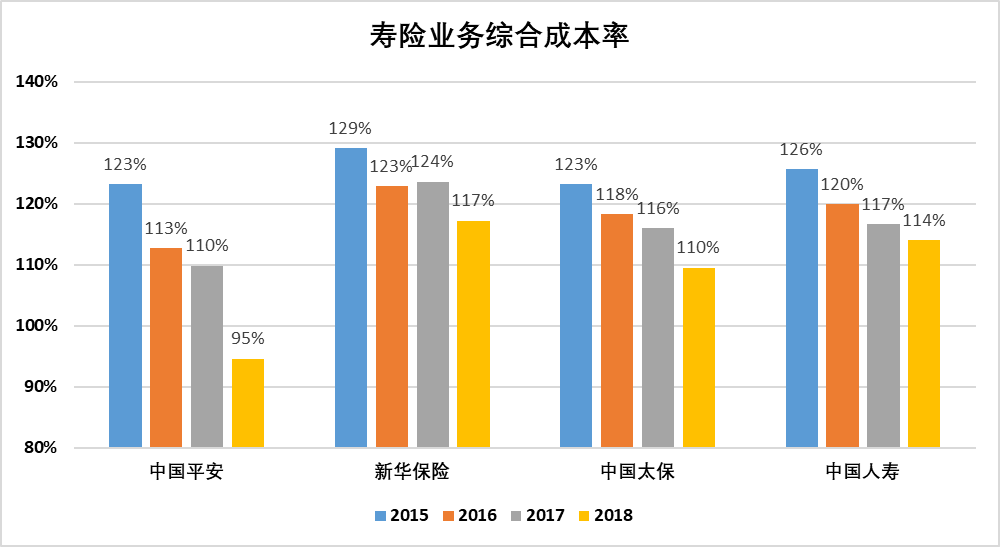
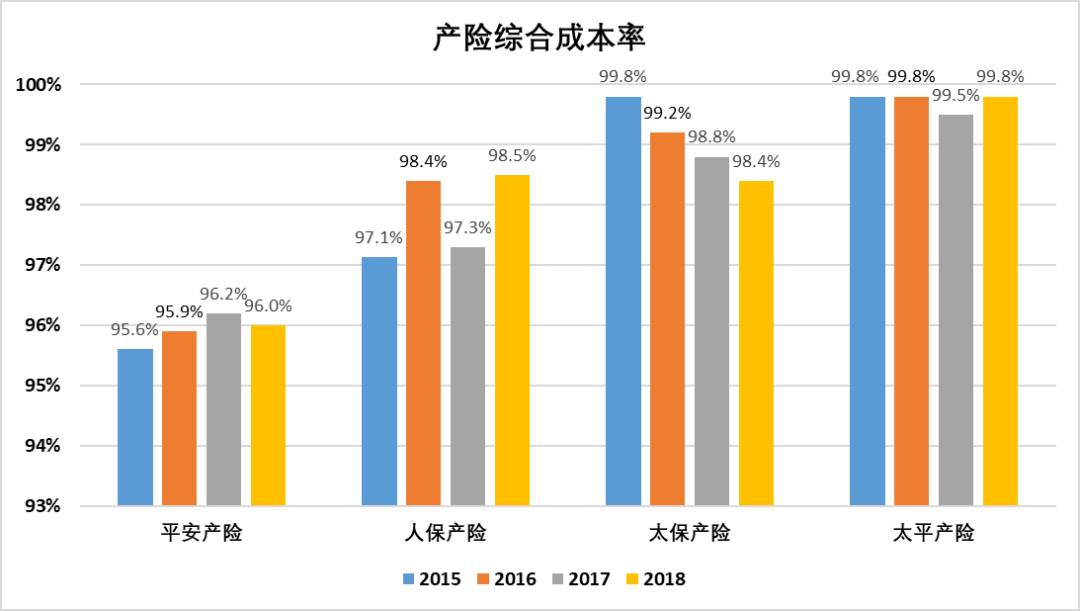
It can be seen that whether it is life insurance or property insurance, Ping An's comprehensive cost ratio of China has been stable and lower than that of its competitors for a long time, and the life insurance sector has continued to decline.
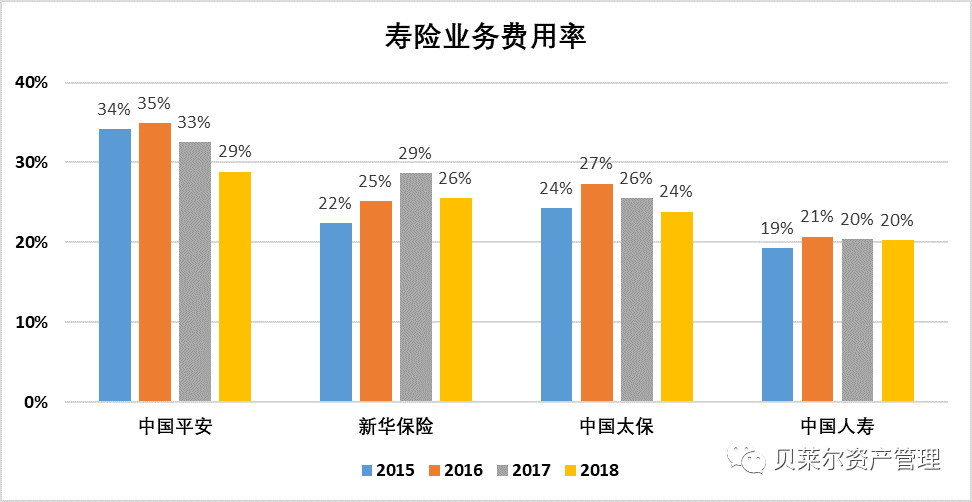
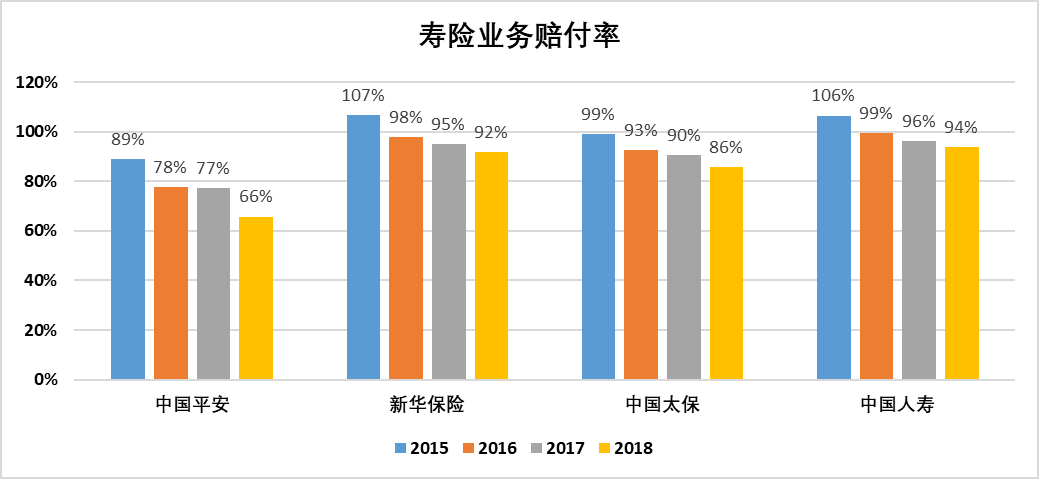
The comprehensive cost ratio can be further divided into expense ratio and loss ratio. Although Ping An Life Insurance's expense ratio of China is controlled by various technological means, it is generally higher than that of its peers. This is determined by intrinsic factors such as higher agent commissions (it will gradually stabilize or even decrease as the proportion of agent channels is controlled). Some specific years, such as 2015-6, are particularly high because the increase in staff in 2015 was close to 40%, resulting in an increase in basic salary. The increase in premiums has not been fully reflected in 15 years. Ping An's low loss ratio of China is due to the fact that, on the one hand, Ping An's financial technology application has higher risk identification capabilities. On the other hand, Ping An's product design capabilities bring price advantages, and the compensation itself is lower relative to the premium. The high proportion of insurance liability reserves reflects that Ping An of China has a relatively young customer structure.

We can also analyze the profitability of life insurance products through the perspective of three differences. The profit (loss) of a life insurance policy comes from the assumptions and judgments on future expense rates, risk taking rates and discount rates during product design, which corresponds to the fee and difference benefits (losses), dead and interest margins (losses) that are often mentioned in the annual report of insurance companies. Among these three factors, the most volatile is the interest spread gain (loss). If the predetermined interest rate of the policy is set too high and the yield is not up to standard in actual operation, the interest spread loss will occur. It can be seen from the company's profit source structure announced by Ping An in the past two years that the proportion of three differences has always been relatively balanced. The spread ratio is well controlled in the range of 30-35%(some overpriced competitors can reach as high as 80%+), which greatly alleviates the adverse impact of if interest rates continue to fall in the future (the Japanese insurance industry experienced a wave of bankruptcy after the sharp spread losses in the 1990s). As the industry promotes the nature of protection, the proportion of traditional protection insurances such as health insurance will gradually increase. The sales of long-term payment products, as well as the proportion of dead and fee differences in the company's products, should continue to slowly increase.
We can also get consistent information from the perspective of product sales. By comparing various products of various insurance companies, we found that whether it is financial insurance or long-term health insurance, Ping An's product pricing is relatively conservative and the predetermined interest rate is low. Since 2018, Ping An has weakened its efforts to start a good start (discount promotions) and has not promoted new dividend insurance. At the beginning of the year, some competitors pushed their main products to the upper limit of the predetermined interest rate of 4.025% annuity insurance and significantly shortened the payment period. However, Ping An still adhered to its consistent conservative pricing, with a predetermined interest rate of up to 3.5%, and more It is dividend-dividend annuity insurance with a predetermined interest rate of 2.5%, and focuses on promoting long-term protection products with higher value. Although this will sacrifice market share, it can ensure the company's long-term profitability and avoid sudden changes in the situation and fall into crisis. In our view, Ping An's long-term strategic vision is invaluable in any industry.
(2) Active agent team
An excellent team of agents is crucial to the long-term development of the insurance industry. Although the contribution of Internet, telephone and other channels is gradually increasing, life insurance products in my country are still sensitive to consumption, especially long-term protection products, which rely heavily on agents. Ping An has an extremely excellent team of agents in the industry. Their performance rate (the ratio of successful business holders to total licensees) reaches 67%(based on the 2018 exchange minutes), which is significantly higher than the industry average of 35%. At the level (data obtained by Xinhua Open Day), their average monthly income exceeds 6000 yuan, which is more than 30% higher than that of their peers.
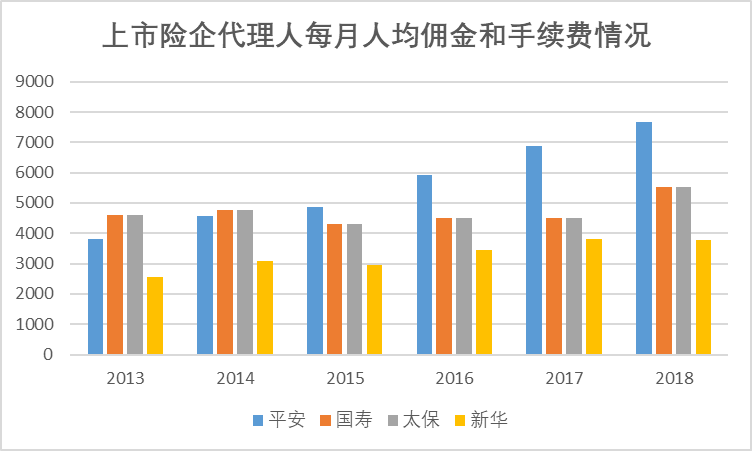
After we contacted agents from many insurance companies, we found that Ping An's agents have strong sales capabilities, high enthusiasm, and are obviously empowered. For example, some questions cannot be answered at the moment, and they receive good support through a dedicated team behind the scenes. When we raised needs such as financial management and trust, some of the agents not only showed rich knowledge, but also made professional teams in other fields of the group quickly connect with each other through recommendations. To some extent, they are more like family financial planners. This model is a considerable advantage for both customers and agents.
(3) Excellent investment capabilities
Ping An's investment capabilities have always been relatively strong and its investment strategy is stable. Actual investment capabilities are often better than assumed, contributing 20% of the profits created by the embedded value of the life and health insurance business.
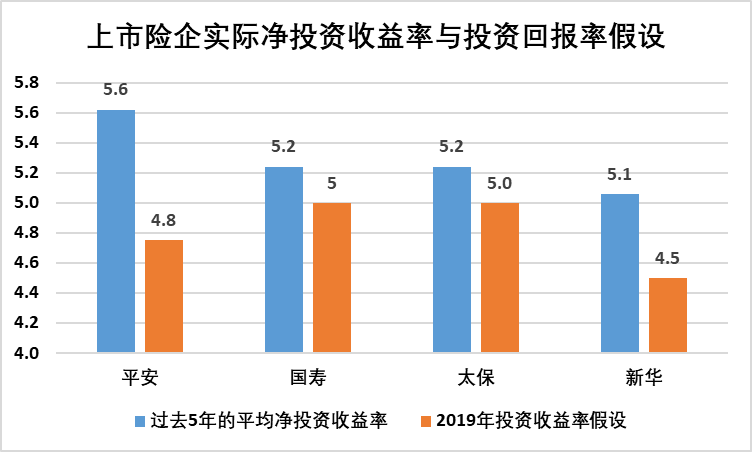
a. Ping An pays more attention to self-operation of stocks and relies less on funds, giving the company more independent options;
b. Ping An's long-term equity investment focuses on industries closely related to the national economy and people's livelihood such as finance, technology, medical care, real estate and infrastructure. Among them, technology companies with synergistic effects such as "Lujin Holdings","Ping An Good Doctor","Ping An Medical Insurance Technology" and "Financial One Account Access" have been incubated. In addition, for long-term equity investments in other real estate, infrastructure, Zhongan Online, etc., based on the principle of financial investment,"basically do not pursue becoming the largest shareholder";
c. In terms of stock investment, it is also obvious that Ping An focuses on long-term value and often buys long-term stable companies (blue chips) at better prices. In terms of finance, representatives include HSBC and ICBC H shares. In 2018, Ping An of China purchased the largest stock stocks of ICBC H shares, buying approximately 450 million shares from July to September 2018. The bid price valuation corresponds to only more than 5 times net profit. In terms of real estate, representatives include H-share Country Garden and Huaxia Happiness. In April 2015, Ping An of China invested 2.816 yuan per share in Country Garden, becoming Country Garden's second largest shareholder, accounting for 9.9% of Country Garden's expanded share capital. On February 6, 2018, Ping An sold 3.4 million shares of Country Garden at 16.78 yuan per share, still holding 9.99% or 2.171 billion shares. On February 14, 2018, Ping An sold another 18.82 million shares of Country Garden at 13.2 yuan per share, reducing its shareholding to 1.956 billion shares or 8.96%, with a market value of 25 billion. China An's investment strength can be seen from the increase in Ping An's share price in the few years after it bought;
d. Ping An has been relatively conservative since its failure to invest in Fortis Bank in 2008 (it paid tens of billions in tuition fees) and is extremely cautious when selecting the investment leader. Chief Investment Officer Chen Dexian joined Ping An of China in 2005. After former Chief Investment Officer Pierce left due to his failure to invest in Fortis, he was inspected for another three years. It was not until July 2012 that he was promoted to chief investment officer of Ping An Group of China.
It can be seen that today's Ping An Company of China is developing steadily in all aspects. But it is by no means smooth sailing that peace has come to this day. Using history as a mirror, you can know the rise and fall. From 1996 to 1999, Ping An once sold policies with ultra-high interest rates, which caused him to suffer from huge interest rate spreads for a long time. From 2000 to 2002, due to the wave of surrenders caused by losses in investment-linked insurance, Ping An had to cut off its assets and pay compensation to save its reputation crisis. The sharp drop in solvency and huge financing in 2008 made Ping An once again the target of public criticism. Ping An has stumbled on its path of growth, with crises large and small. It had to move out of the American GEICO insurance company. We believe that GEICO can become a towering tree in the U.S. auto insurance industry today, which is inseparable from its experience of being on the verge of bankruptcy in the 1970s due to over-expansion and over-pricing. Although we cannot ensure that the future of Ping An of China or GEICO will be smooth, we know that those who survive are usually the ones with the most crisis awareness, and only after experiencing a crisis can we always maintain a crisis awareness.
Here we specifically point out that the above analysis is only used as an exchange of methods for studying industries and companies in the past year and does not constitute a recommendation to buy shares of Ping An Company of China. We have been relatively optimistic about Ping An in China in the past year, but it does not mean that we will remain optimistic under any circumstances in the future.
III Investment summary
According to the private equity fund publicity system, this section will not display the company's product performance or positions, but will only be used as a simple sharing of some investment experiences from the past year combined with our investment philosophy. Company product owners will have another version for more detailed disclosure.
We buy stocks not in the expectation of rapid appreciation in the near future, but as long-term partnership interests of the company. So we focus our measurement on the business results companies achieve over a long period of time, rather than the price they will be trading on the market on a given day. It's like in a basketball game, where players keep their eyes on the scoreboard instead of the ball, paying too much attention to the current price in the market will undoubtedly make the situation seem passive. What's more, as mentioned in the margin of safety above, prices are just quotes made by a few active traders in the market in the current mood. Long-term investors either ignore them or conduct large repurchase and purchase (which is what many companies are doing). We don't care much about these short-term floating profits and losses. Stock prices will always rise and fall. In fact, lingering at low levels for a long time may be more conducive to our long-term philosophy. In this way, we have the opportunity to continue to buy, while our peers are still suppressed by retractions and may even be forced to reluctantly close their positions (we have no warning line to close positions, and we only accept long-term investment funds). Good companies will also seize these opportunities to make good mergers and acquisitions and funding arrangements, just like shopping at a discount mall. On the contrary, when the market is excited, it is really at a loss.
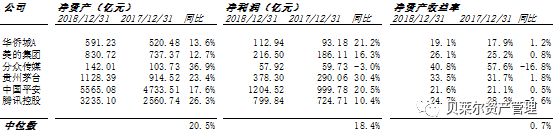
Note, this list only represents some of the promising companies in the past year and does not constitute any recommendation to buy stocks
Therefore, instead of focusing on stock prices and returns, we prefer to examine the changes in the company's intrinsic value each year under different economic market conditions. Here is an expression using some of the companies we are optimistic about in 2018 (*). It can be seen that although their stocks were once abandoned by the market, the economic value of their companies has been improved to varying degrees. Considering the multi-challenging macro environment in 2018, it is indeed commendable that these companies still achieved such excellent operating results. During the same period, the net assets, net profit and net asset ratio return of the Shanghai and Shenzhen 300 Index increased by 9.3%, 7.3% and-0.6% respectively (median).
(*) Since the understanding and calculation of intrinsic value include too many subjective factors, the net assets, net profit and return on equity in the company's annual report are used here as the medium to measure the company's value.
This memorandum ends here. Thank you for taking your precious time to read such a nagging pile of words. If you have any questions, suggestions or criticisms about any content in the memo, please send an email to eugene_tu @ belaircapital.com.cn. Thank you so much.
Fund Manager of Bel Air Asset Management Co., Ltd.
Tu Shiyang
2019/05/31
 Guangdong public network security no. 44000000000000


