This is the sixth investment memorandum for the fund managed by Bel Air Asset Management Co., Ltd. since its establishment in 2018. In this memorandum, I will introduce the operating overview of the company we have focused on over the past year, briefly talk about some of our thoughts on the current market and the progress of artificial intelligence, and discuss Tencent Holdings, Panduo, Kweichow Moutai, Dajian Yuncang, Midea Group, Focus Media and the financial real estate sector (China Merchants Bank, Ping An, Vanke, China Resources Land, Longhu Group) in different sections. I hope that through this communication, investors can better understand our investment style, recognize our long-term perspective, and at the same time realize our limitations.
1. Business Overview
Last year, the market was turbulent. As of December 31, 2023, the Shanghai and Shenzhen 300 Index of A-shares, the Windsor A Index and the Hang Seng Index of Hong Kong stocks fell by 11.4%, 5.2% and 15.4% respectively. The Shanghai and Shenzhen stock markets have fallen for three consecutive years, and Hong Kong stocks have also fallen for four consecutive years. At a time when everyone is avoiding the stock market, we have become more greedy in the face of huge challenges and difficulties.
We buy stocks not in the expectation of rapid appreciation in the near future, but as long-term partnership interests of the company. We are not interested in making quick money, and good investments usually take some time. I know very well that neither I nor the members of my team have the ability to obtain excess returns by predicting markets and stock prices. But I also believe that our patience can take us further.
Rather than focusing on short-term stock price changes, we prefer to examine the changes in the company's business results and its intrinsic value under different economic conditions each year. The table below lists the companies we focus on and some of their key operating data over the past year. Since the understanding and calculation of intrinsic value include too many subjective factors, some comprehensive indicators are used here as a medium to measure the company's value.
Figure 1. Operating data of companies we focus on and companies in the Shanghai and Shenzhen 300 Index
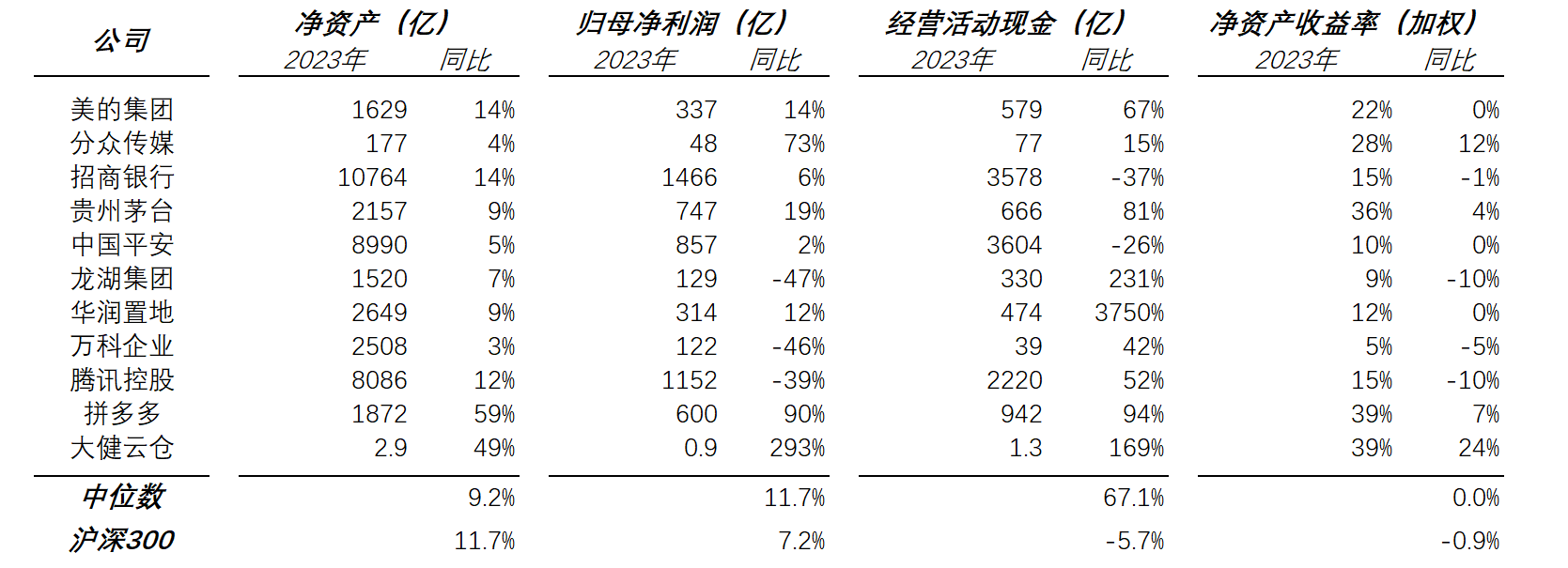
Data source: Annual report of listed companies
Note: This list does not represent a recommendation or a company's current position. Even if it holds, the proportion may range from 0 to 40%.
At the same time, we will also pay attention to other meaningful companies and assets, such as Nvidia, META, Vietnam ETF, gold, etc.
2. 3000-point defense battle, AGAIN
"At the time, Country A was an emerging market, while Country B was still in many ways the world's economic superpower; in Country A, companies could easily obtain the land they needed to lay railway tracks; in Country B, this was doomed to face many deep-rooted objections;
Country A, which was in a stage of rapid development, was a capital importer, while Country B, as the world's most important financial center at that time, was a capital exporter. Country A was undoubtedly the world's largest emerging market at that time, but few stock investors could make a fortune in this market."
- "Bubble Escape"
(Guess which two countries are Country A and Country B? Answers will be provided at the end of this chapter)
At this time last year, we talked about the 3000-point defense war. More than a year has passed, but we are still fighting the 3000-point defense war at this moment! Is our stock market really going to experience Japan's "lost thirty years"? When will this battle of defense be won? Will it turn into a protracted war? To answer the first question first, we don't think we will experience Japan's "lost thirty years" because:
1) The current valuation of China's main index, the Shanghai and Shenzhen 300, is only about 11 times, far lower than the valuation of Japan's Nikkei Index that year. The Japanese stock market began in the "Lost Thirty Years"(1990) with an overall valuation of 70 times price-to-earnings ratio. If the 1990 stock market valuation is adjusted to 11 times consistent with the current main A-share index, and the recent Nikkei index is used as the end point (about 20 times), then in the next three decades, the Shanghai and Shenzhen 300 will still be able to obtain a total return of 450%. If a dividend of 2% is taken into account, the overall annualized rate of return will be 7%.
* (Take 38916 points at the close of the Nikkei on 1989/12/29, adjust it to 11 times to 6115 points, and to 33464 points at the Nikkei on 2023/12/29, with an annualized return of 5.1%)
2) We are at a different stage from Japan. In 1990, Japan's per capita GDP reached US$25,400, exceeding the United States 'US$23,900 in the same period. By 1995, after five years of "lost", this gap widened further. Japan's per capita GDP reached US$44,200, 54% higher than that of the United States (this also shows how meaningless GDP is). Japan's economy grew at a super-high speed during the 25 years from 1970 to 1995, and per capita GDP soared from only 40% of the United States to 150% of the United States. You know, this period is also one of the fastest growing periods for the U.S. economy. In such a short period of time, it has significantly surpassed the most developed economies and is obviously seriously overdrawn. According to Masaaki Shirakawa's "Times of Turbulence", even though Japan's economic stage was so mature at that time, it did not completely lose its strength and status as a developed economy in the face of various challenges later. Japanese companies have demonstrated good competitiveness and adaptability in the process of globalization. Japan is making positive progress in scientific and technological innovation, industrial upgrading, and social welfare, and its economy continues to improve. On the other hand, our current overall GDP and per capita GDP are only about 65% and 16% of that of the United States respectively. There are also considerable differences in indicators such as disposable income and urbanization rate. Our long-term growth space and potential are completely different from those of Japan back then.
3) Even the United States has been compared to Japan many times. In fact, whenever the market experiences a major crisis, Japan's failure cases will be compared and predicted that the end will come. After the bursting of the Internet bubble in 2000 and the subprime mortgage crisis in 2008, various media and research have hyped up this cliché storyline against the United States.
Figure 2. The United States repeats Japan's mistakes?
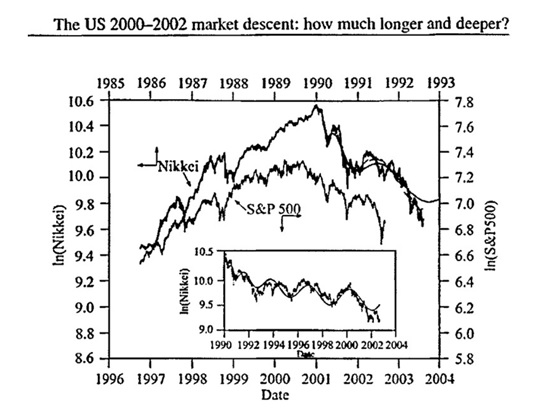

For example, the above American academic journal used the S & P 500 index in the U.S. market in 2002 to compare Japan's Nikkei index in the 1990s to demonstrate the "lost" process of the United States. In hindsight, the S & P 500 position was actually the low point at the time.
Let's answer the second question, when will the 3000-point defense battle be won? To be honest, I don't know. Predicting the future direction of the index is not our area of expertise. We also tend to think that no one can predict what will happen in terms of economics, geopolitics, interest rates or the stock market. Federal Reserve Chairman Powell also does not know whether to cut interest rates or raise interest rates next.
So what do we know? We know that the valuation of the CSI 300 has dropped from 11.34 at the end of 2022 to 10.85 times at the end of 2023. As we pointed out last year, the stock market has been digesting and depressing valuations, and the companies behind the stock index are continuing to grow and make profits, and the price/performance ratio is getting better and better. It is true that the U.S. stock market and Indian stock market hit new highs during the same period, but their valuations are also rising rapidly and their value for money is getting lower and lower. This is not true, Michael, a well-known fund manager who once predicted the 2008 US financial crisisBurry has begun to shift to heavy positions in U.S. -listed Chinese stocks. According to disclosure on February 16, 2024, its largest positions are already two China companies, BABA (Alibaba) and JD (Jingdong), accounting for a total of 12%. Even an American in a foreign country has begun to think so highly of our company. Can we be a little more optimistic about the future?
Let's go back to the history described earlier in "Bubble Escape"(the italics at the beginning of this chapter). If country A is China and country B is the United States here, I believe no one will have an opinion. But in fact, in the original text, country A is the United States and country B is the United Kingdom. This is not a prediction that China will replace the United States, just as the United States replaced the United Kingdom. There are many similarities, but there are also many differences. For example, the British owned as much as half of the shares of American railways at that time, which was precisely the result of the British providing funds to export their own railway products. This is not consistent with our current observation. Here, I hope that everyone will not be too pessimistic because of certain stages of development, but also not blindly optimistic like "turning around and entering KTV after leaving the ICU."
Note: This expression only represents long-term optimism about outstanding companies, does not represent short-term bullish, nor does it represent a recommendation to buy BABA or JD. What we recognize is a cautious optimism. For example, if strong policies are introduced and implemented, asset recession risks can be well managed.
3. Artificial intelligence
"What's the use of it?"
- Robert Lloyd, IBM engineer, when talking about the practical value of microprocessors, 1968
"The impact of the Internet on the economy has obviously not exceeded that of fax machines. Ten years later, the word information economy may just be synonymous with stupidity."
- Paul Krugman, 1998
In the past year, significant progress has been made in the field of artificial intelligence. The search volume of generative AI has surged, and multimodal deep learning has enabled AI models to process different types of information, such as the conversion of text and images. At the same time, AI is gradually integrating into all walks of life, such as steel, power grid, film and television, to provide intelligent support for practical work. In addition, artificial intelligence is also deeply integrated with fields such as medical care, environmental protection, and virtual reality, providing new ways to solve various problems. In short, artificial intelligence has made important breakthroughs in both technology and application levels, showing huge development potential.
The most direct impact of artificial intelligence on our research and investment is that it can greatly improve the efficiency of information search and report writing. For example, the above paragraph was written by artificial intelligence. (To be precise, this passage is the second answer given by Wenxin, Baidu's big language model. The first answer was "I'm sorry, the service is too hot. Please try again later." Its popularity can be seen.)
In the annual reports and meeting minutes of listed companies that we studied, we also saw that artificial intelligence is making amazing progress:
About 30% of posts posted on Facebook News are pushed by its artificial intelligence recommendation system, which has doubled in the past two years, and more than 50% of the content people see on Instagram is AI recommendations. After Reels introduced AI model recommendations, user viewing time increased by 8% to 10%;
Tesla uses artificial intelligence neural network algorithms to reduce the frequency of human intervention in its latest version (V12) of fully autonomous driving to 1 percent of the previous version (V11)(according to Musk);
OpenAI for Microsoft's Azure cloud business is already used by more than half of Fortune 500 companies. AI's actual contribution to Azure cloud business revenue increased from 3% in the previous quarter to 6%;
Alibaba's data platform uses AI technology to help merchants increase their efficiency by 20% when promoting. Take ubras, a well-known underwear brand, as an example. With the help of Alibaba's self-developed multi-modal big language model, the conversion rate of orders on the first day of launch for its new products increased by 85%, and the transaction volume increased by 1.27 times.
Looking at the launch of so many amazing services and products in a short period of time, we are even more convinced that the changes brought about by artificial intelligence will greatly affect our world. As value investors, how to ride the wind and waves in the wave of technology, we believe that there are two topics that are crucial to us:
1) Look for high-certainty opportunities among winners who have already won
Even if a disruptive technology successfully achieves the expected results, investors 'returns will be very poor if it enters at the wrong time. Due to the excessively fierce competitive environment and overly optimistic valuation levels, some technologies may have no investment value during most of the technology life cycle, such as railways, automobiles, etc. We must work hard to find (or wait for) unique investment opportunities that suit us. For example, like Buffett, a few years after the iPhone went on the market, the industry's competition and the big waves had been completed, and the competitive landscape was stable, and we began to invest heavily. Or like Tencent, which focuses on social networking, it can be said that it has a solid foundation for future growth after mobile WeChat defeated Micha in 2012.
At this stage, in the entire artificial intelligence industry chain, we are not sure whether or how much money they can make from their investment and efforts in artificial intelligence on the application-side companies such as Tesla and OpenAI. But what we can be sure is that the semiconductor industry led by Nvidia and TSMC will most likely benefit a lot in this process. Among them, Nvidia, which provides high-performance AI accelerator card systems and solutions, is the most eye-catching in terms of competitive barriers and business models.
With its leading technology and innovation capabilities, Nvidia has a market share of up to 90% in the data center AI market, and its position is unparalleled. As early as before the generative AI market did not exist, founder Huang Renxun had the foresight to gift the accelerator card to the OpenAI team. After leading the market, they did not stop, continued to pursue excellence, dug deep moat, and built strong competitive barriers in hardware, software, network architecture and other fields:
Hardware: Layout of three key processors, CPU + GPU + DPU, is like Cisco and Intel in the Internet era, with unique integrated data center delivery capabilities;
Software: Years of ecological accumulation of CUDA (programming computing platform launched by NVIDIA) and joint customization development by large model manufacturers have enabled their products to have better performance, wider ease of use and deeper binding;
Network: Create multiple network capabilities from NVLINK to InfiniBand and Ethernet to enhance the crucial clustering capabilities in the era of accelerated computing.
These ecological advantages allow Nvidia to provide customers with the strongest computing power and the lowest overall cost at the same time, and customer conversion costs are extremely high. We believe that for a long time to come, NVIDIA will dominate like Intel in the Win-Tel Alliance (Windows + Intel).
In addition, its short-term results are quite certain. Just study the recent capital expenditure plans of Nvidia's major downstream customers, such as Microsoft, META, and Google (which together account for 50%+ of Nvidia's revenue).
Meta raised capital expenditure by $10 billion this year, rising to $35 billion to $40 billion for the full year;
Google said it spent about $12 billion or more on capital expenditures each quarter this year, emphasizing that it was not buying offices;
Microsoft's capital expenditure in the most recent quarter was $14 billion, and it is expected to increase significantly;
According to a survey by a third-party organization, China has strong demand for Nvidia's H20 chips. ByteDance recently doubled its order to 300,000 chips, while Tencent increased its order by 50% to 120,000 chips.
The only fly in the ointment is that there is uncertainty in NVIDIA's medium and long-term space. Will training needs keep rising exponentially? Even if the need for frequent reasoning becomes the main contradiction, will the demand for accelerator cards increase exponentially? For example, DeepSeek, a domestic large model launched by Magic Square recentlyv2 used only one-twentieth of the computing power of GPT-4 to achieve similar performance, while reasoning costs were reduced by two orders of magnitude (a big compliment to the Magic Square team). Of course, this may also lead to new applications and greater demand. Just like Windows and Intel, which you chased after each other back then,"Whatintel gives, Windows takeall”。But we don't see "Windows" yet. I believe that there will be a "Windows" that belongs to the AI era, such as an artificial intelligence personal assistant that everyone owns, or other super applications that are currently unexpected. But will this "Windows" appear this year, or five years later? You know, the microprocessor was invented in 1972, but it was not until 10 years later, in 1982, when Intel won IBM's PC contract that it began to have a large market. The same iPhone was born in 2007, while the most successful mobile application WeChat was born in 2011, four years later, and Facebook, the most successful mobile Internet company, had to wait another year until 2012 before going public.
In addition, if a technological revolution continues to require huge amounts of capital investment, even if it ultimately succeeds, the investment return may not be satisfactory. Nvidia's own expenses are not bad (the asset-heavy manufacturing and production work is mainly upstream TSMC), but for its downstream companies, these expenses are huge (how many companies can afford tens of billions of dollars in capital investment every year?). Microsoft and OpenAI are still planning a Stargate AI investment layout costing up to US$100 billion. Benefiting from the current rapid development of the U.S. economy, major technology companies still have sufficient financial resources to invest like burning money. But what if the economic cycle comes? It is often this part of unnecessary expenses that may be the first to be cut. In the final analysis, there is currently no particularly popular successful model that can be commercialized on a large scale on the user's C-side. Even Microsoft, which is the most active in applying AI, has seen Office.365 's growth slowed down in the first quarter of 2024. At the same time, the adoption of its main AI functions such as Copilot has not been rapid by users and has failed to accelerate the growth of Office business. Bing, the search engine that has introduced AI, has also lacked growth momentum in the near future.
We tend to think that AI will change the world, but we also know that people tend to overestimate the short term and underestimate the long term. At present, the pattern and certainty of selling shovels are the best, but we cannot overestimate the prospects of selling shovels. If the miners cannot find gold, the shovel sellers will fall. In the entire AI field, from downstream applications to upstream sales of shovels, I think the core contradiction in 1-5 years may be whether the C-side killer application comes first or the economic macro cycle comes first (or power and data bottlenecks come first).
2) Avoiding losers who have been disrupted by technology
There are many jaw-dropping cases of investment losses in the advancement of industry and technology. Trust me, you don't want to be an investor behind the losers. Beginning in 1835, the shares of the British Canal Company had a long decline that lasted for decades as the railway revolution began. After that, the automobile revolution made railways a loser, the Internet revolution made traditional offline retailers a loser, and the mobile Internet revolution made the powerful Win-Tel alliance a loser.
We don't see any obvious losers in the current AI transformation, but we have some concerns about Apple. As a winner of the previous generation of mobile revolution, Apple should have seized this opportunity of artificial intelligence. Apple's "ChatGPT", also known as Siri, was launched as early as 2011 and has accumulated massive amounts of data and feedback in the hands of hundreds of millions of users. However, there has been no improvement for many years and is far behind. Now, Apple plans to open up its mobile AI outsourcing and hand over its lifeblood to partners Google and Baidu. This may be a rather failed operation in the history of corporate development, even if the instant value of this function is really not visible yet. Is this a bit like when Yahoo thought that search engines were of little value and outsourced them to Google, but the country gradually changed ownership? In any case, as a technology company, it is really puzzling to use almost all of its invincible cash flow for buybacks and dividends without investing hard in the future.
In short, when dealing with artificial intelligence, we will neither be overly crazy nor stand on the sidelines. Searching for highly certain winners and avoiding obvious losers will be the main theme throughout our years to come. As an investor, it is amazing to watch this group of enthusiastic entrepreneurs and entrepreneurs overcome thousands of difficulties, step by step elevate artificial intelligence technology to a new level, and transform technology into magical products and services to launch the market. It is a great fortune to feel and participate in such a magnificent epic revolution in technology, business and even human history. While amazed, we also remind ourselves from time to time that technology will undoubtedly change the world, but it may not change human nature.
4. Tencent Holdings
"As an investor, Tencent always adheres to its own principles and strategies, provides strong support to invested companies, and grows with them. As of now, Tencent has invested in more than 800 companies in total, of which more than 70 have been listed, and more than 160 have become unicorns with a market value or valuation of more than US$1 billion."
- 2018 Tencent Investment IF (Insight&Forecast) Conference, Liu Chiping
As of December 31, 2023, Tencent's annual revenue increased by 10% year-on-year to RMB 609 billion, non-IFRS net profit increased by 36% year-on-year to RMB 157.7 billion, and free cash flow increased by 89% year-on-year to RMB 167 billion. In the latest 2024Q1 financial report, revenue, net profit and free cash flow also increased by 6%, 54% and 0.2% respectively. Tencent's moat is still rock-solid, and new growth engines are also continuing to work hard. For example, the total usage time of video accounts has increased by 80%, video account advertising revenue has increased by 100%, and video account e-commerce GMV (total commodity transaction volume) has increased by nearly 3 times (year-on-year in 2023), the total flow of Mini games has increased by more than 30%. AI has significantly improved advertising, corporate WeChat and Tencent Meeting, etc.
At the 2023 results conference, the most shocking thing may be that the management proposed a repurchase plan of at least HK$100 billion. We believe that this repurchase plan has pros and cons.
Short-term benefits. In last year's memorandum, we mentioned that the open-ended and open-ended reduction of holdings by major shareholders destroyed the company's value. At present, this repurchase plan launched by Tencent is more than enough to cover the reduction of major shareholder Prosus's holdings (50 billion to 100 billion yuan per year, dynamic changes); from the stock price perspective, we expect Tencent's repurchase to offset the sale of Prosus. There is also a certain degree of positive impact. One of Tencent's management advantages is its advanced equity incentive plan: sharing the company's growth and stimulating team morale through extensive long-term stock binding, from executives down to new employees who have just arrived. In the short term, this buyback plan will greatly boost morale, team enthusiasm, and employees 'real income.
Long-term disadvantages. If this repurchase plan is carried out every year and continues to increase, it will have a considerable negative impact on the long-term value of the company. Apple, which continues to buy back huge amounts mentioned in the AI chapter, is a typical negative case. If technology companies fail to invest firmly in the future, even the most powerful champions will soon be unable to keep up and lose in subsequent rounds of technological revolution. This is especially important for Tencent. Tencent's investment is what we believe is the most distinctive feature of Tencent among many major technology companies, and it is also one of its most important competitiveness.
A review of Tencent's investment history reveals that even compared with the most professional investment institutions, Tencent is not at a disadvantage. Calculated in different ways, its annualized rate of return will be as high as 20%-30% from 2005 to 2021. Even after nearly two years of halving the assets of China and Hong Kong stocks, the annualized rate is still 10%-15%. According to the data provided by IT Orange, based on the number of investment sales, after the cliff-like decline in 2022, the number of Tencent's foreign investment sales in 2023 dropped sharply to 37, a year-on-year decrease of 60%, compared with the 2021 high of 296. Since then, it has dropped by 88%.
Figure 3. Time distribution of Tencent investment events, 2015-2023
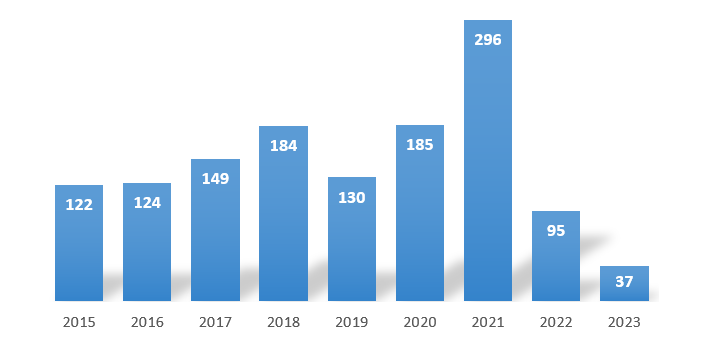
Data source: third-party channel IT Orange
Fortunately, Tencent still has high-quality companies worth hundreds of billions of dollars in its investment landscape, including many top players with considerable long-tail possibilities, such as Pinduo, which is expanding the global e-commerce market, and AIGC and Big Models born this year. Four of the five unicorns (respectively Intelligent AI, Baichuan Intelligence, Minimax Dream, Everything One, and Light Years Away). Tencent still has strong investment capabilities and the most patient long-term perspective. The attitude of supervision towards Internet platform companies has changed significantly. A recent meeting at the top level stated that "we must actively develop venture capital and strengthen patient capital." In addition, the prospects of its main WeChat and video account ecosystems are still immeasurable, and they are also candidates with the most potential to launch artificial intelligence personal assistants (the interfaces of various Mini programs such as ordering, travel, and services are ready, and only a smart agent needs to call them all). We believe Tencent can seize the opportunity.
We will continue to pay attention to Tencent's development in its core business, artificial intelligence and investment fields.
5. Fight more
"The best customer service is lower prices."
- "Rich America", Sam Wharton
There is such an e-commerce company that surpassed Alibaba, which has been operating in China for more than 20 years in terms of market value five years after its listing; TEMU, the overseas e-commerce platform launched, defeated SHEIN, the largest overseas e-commerce company in China, which has been deeply involved in the U.S. market for 10 years, in terms of download volume, monthly activity (number of monthly active users) and other indicators, and its activity in the U.S. market last month reached 1/3 of that of e-commerce giant Amazon. It is Panduo, a super species that continues to evolve and wins in the most competitive environment in China and sets out on an overseas expedition.
For a long time, we have always believed that the retail industry is too competitive, and that PIDANDOO only has advantages in small areas such as agricultural products and white-label fields, and has a high valuation. We really began to pay attention to Pianduo after we read it in the annual reports of listed companies such as Midea Group, Haitian Flavor, and Anta. We find that more and more people around us are starting to use PANDOU and buying high-value products such as xbox and iPhone. Only after some excellent colleagues did we have an epiphany. The massive amount of consumer traffic accumulated by the Pinduoduo platform and the mental positioning of absolute low prices have made it unstoppable. We believe that Pinduoduo has built an insurmountable moat in a bad industry (Munger jokingly calls "this damn retail industry").
Adhere to the ultimate low price. This is deeply engraved in Pinduo's genes: an average retailer will say when they see a product that sells for 100 yuan,"I don't know if I can sell it for 130 yuan.", Costco (Costco, one of the best membership-based retailers in the United States) would see this item and say,"How can I sell it for 80 yuan"When Pinduo sees this product, he will say,"How can I sell it for 70 yuan, then sell it for 60 yuan tomorrow, and then sell it for 50 yuan the day after tomorrow..."。Since they started with agricultural products and white brands, Dianduo has been paying attention to this issue. Whether it is a group model, bypassing middlemen and going directly to the factory, only refunds, and the highest diversion of low-price weights, etc., innovations all follow the same mission: low prices. What is most distinctive about the company is its unremitting pursuit of perfection in the dimension of price.
Unparalleled management. The company's founding management team has strong technical backgrounds such as Mathematical Olympiad Gold Medal, Google, and Tsinghua Computer, and has strong insight and vision into the retail business model. If the business models of top Internet companies such as Alibaba and Tencent are far ahead of traditional industries that focus on assets and low human efficiency, which is one-in-a-million, then it is no exaggeration to say that it is even one-in-a-hundred-thousand. They adopt a strategy similar to Netflix's, hiring the best talents with 120 points in the industry and giving them a highly competitive salary of 150 points. As of the end of 2023, Tencent has 105,000 employees, Alibaba has 220,000 employees, and Pinduoduo has only about 13,000 employees, which is equivalent to Pinduoduo using only 1/10 of its people to create the same level of income and profit level as Tencent and Ali!
We admit that prejudice and stupidity prevented us from discovering such an extraordinary company earlier. Fortunately, a dispute over audit papers between China and the United States a year ago caused panic about the delisting of Chinese stocks, thus giving us an opportunity. Today, Pinduo is still traveling around the world and has entered 50 countries and regions, including Asia, Europe, North America, Latin America, Africa and Oceania. Without political factors, we believe it will be sooner or later before it conquers the world and challenges Amazon (just like PK Jingdong and Ali in China). Even if the worst-case scenario were to be lost, there would still be a market for 7.7 billion people around the world. We look forward to its triumphant return.
(Risk warning: TEMU, Pendoduo's overseas business, is greatly affected by cross-border trade policies and policies. If the U.S. market is lost, the time to turn into profits will be delayed.)
6. Guizhou Moutai
"When there are agents between producers and consumers, higher prices can bribe purchasing agents and give them greater incentive to hoard goods, control supply, and drive up prices. This leads to higher profits, sales and returns that far exceed endogenous growth for both agents and producers."
- Charlie Munger
In last year's memorandum, we focused on Moutai's various "indirect" price increase capabilities and the greater willingness of major shareholders to raise prices, and it had been more than five years since the last price increase in 2018. Sure enough, on October 31 last year, the company decided to "not install it" and announced that it would increase the ex-factory price of Kweichow Moutai by 53% vol from November 1, 2023, with an average increase of about 20% to 1,162.8 yuan. Everyone knows that market prices are determined by supply and demand, but for Moutai, which has long been in short supply, this price increase is still hundreds of thousands of miles away from the market price of 2500+, and naturally will not affect sales.
Figure 4. Moutai ex-factory price
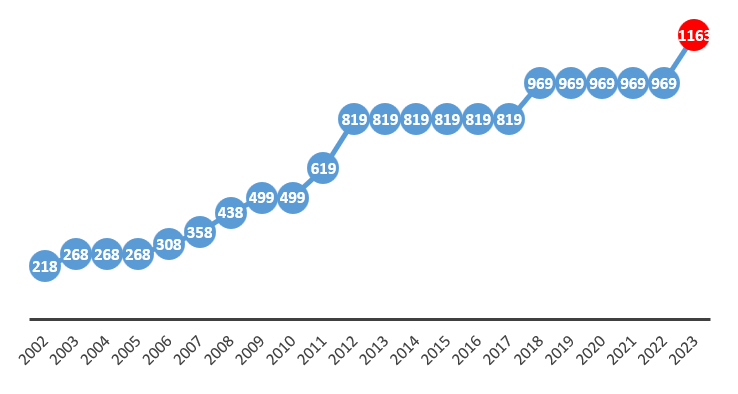
Data source: Listed company announcement
With the help of direct and indirect price increases, Kweichow Moutai achieved total operating income of 150.6 billion yuan in 2023, a year-on-year increase of 18%, and net profit attributable to shareholders of listed companies was 74.7 billion yuan, a year-on-year increase of 19%. A cash dividend of 56.55 billion yuan was distributed throughout the year, accounting for 76% of the company's net profit attributable to the parent company in 2023, and the dividend amount hit a record high. At the same time, it is worth mentioning that the company's newly created product "Moutai 1935" has created a miracle in the industry. In just two years after its launch, it has become a single product with revenue of tens of billions.
Recently, we have observed that the market price of Feitian Moutai is somewhat unstable. This may be a large cyclical fluctuation, or it may be some changes caused by the company's overly aggressive strategies, such as the launch of the 375ml Moutai Xunfeng wine in early 2024, which is suspected of being replaced, and the continued marginalization of the share of traditional offline dealers. In our 21-year memos, we mentioned that
"Do (Moutai) manufacturers dare to continue touching the part of the cake that was cut away by dealers? If you don't dare, the growth brought by the subsequent price increase will shrink. If they dare, manufacturers must strike a delicate balance. Because once the cutting force is too strong and the support of dealers is lost, resulting in an imbalance in the system. Can the cake that has been prosperous for many years continue to expand? What will this cake look like when those that are hoarded, unopened, and hyped are thrown into the market?"
This is an important issue that we need to think carefully and continue to follow up and observe. Just like without dealers, can Toyota's commercial MPV Elfa still ask for 1.2 million yuan (it only sells for 200,000 to 400,000 yuan in Japan)? In the long run, attributes such as luxury-like goods, strong social interaction, storability, and difficulty in replacing will not disappear, and will continue to give Moutai strong brand power. Unless the company raises prices too aggressively or excessively marginalizes dealers, causing the price trend to reverse, Moutai will remain in short supply for a long time due to its leading position in banquet, business and gift markets. As long as China's high-net-worth population and high-end demand continue to grow, Kweichow Moutai will remain a scarce asset.
(Risk warning: 1 Moutai is highly related to M2, but it will also be affected by other factors, such as policy risks in 12 and 13 years, and M2 may not always rise, and the risk of deflation is not completely non-existent;2 Moutai's true bottle opening rate is a mystery. It is said that it is only 30% or less. If the turmoil causes the price trend to reverse, dealers and investors rush to put the backlog of inventory on the market, it may cause a price collapse.)
7. Dajian Yuncang
"If you don't innovate, you will die."
- Henry Ford
Dajian Yuncang (hereinafter referred to as Dajian) is a B2B platform that focuses on cross-border overseas shipping for major categories such as furniture. The company mainly has three businesses: 3P, 1P in-station, and 1P out-station. We focus on the first two businesses (together accounting for 65%):
3P business (accounting for about 27%), that is, operating B2B platforms. At one end of the B2B platform are many furniture factories distributed in East Asia such as China and Vietnam, and at the other end are brand distributors distributed in overseas e-commerce platforms such as Amazon, Wayfair, and Walmart. In this process, the company earns income by providing matchmaking, logistics, and warehousing services.
1P station business (accounting for about 38%), that is, the company purchases furniture from the factory and sells it to cross-border dealers through its own B2B platform (cross-border dealers then go to Amazon, Wal-Mart and other websites to sell it).
There is a considerable threshold for the cross-border operation of traditional large-sized furniture, because China's large-sized products can only be shipped by sea to Europe and the United States. The time period is more than one month. The cargo volume is large, warehousing and logistics are expensive, and the cycle is long. The threshold is high and there are few players. This is why the field of cross-border large-sized products has always been a blue ocean market compared to cross-border small products. We believe that the essence of Dajian is to use the spillover supply chain capabilities of East Asia such as China, the huge and enterprising buyer base of cross-border trade, and the strong demand of overseas consumers for high-quality and affordable furniture in a high-inflation environment., and the operation and management capabilities of Internet e-commerce platforms to create an efficient B2B business model. We believe that Dajian has significant advantages over its competitors:
Innovative B2B model.
Large-scale overseas players are mainly B2C, that is, brand furniture manufacturers, with at most one additional overseas warehouse service. The biggest problem with this model is the large capital expenditure on the production side and the poor profit margin. Because furniture is a highly non-standard product, the factories and production lines built today may have to be adjusted or reinvested in additional production next year. Comparing the financial reports of several top players in the industry, including Lege, Henglin, Aoji, and Gujia Home Furnishing, we can find that these companies must make large capital expenditures every year, and in some years, capital expenditures even exceed operating net cash flow, which means that the hard-earned profits every year have to be replaced with a pile of equipment and factories. In addition, the sales end has to undertake overseas opening and inventory, which is difficult and highly cyclical;
At the other end of the B2B model constructed by Dajian, the traditional ToC's furniture e-commerce platform is also difficult to run. For example, Wayfair has suffered losses all year round, and Amazon has also tilted towards small items in warehouse and other resources. This is because e-commerce platforms rely heavily on monthly jobs and repurchase to share the cost of investment to form profits, and there are basically no consumers in the furniture category who will buy it every now and then (there are people around you who can't resist buying a bed or chair every month?);
Through business model innovation, Dajian Yuncang, like Coca-Cola and Marriott Hotels, gives up all the dirty and hard work with low margins (bottling, hotel construction) to others, while it only manages the most valuable links with high profits and high returns.
First-mover advantage and network effects.
The barrier after B2B platforms mature is the bilateral network effect, that is, more factory sellers will attract more cross-border buyers, and more cross-border buyers will attract more factory sellers. Compared with ordinary B2B platforms, Dajian is deeply involved in the warehousing and logistics of goods, so users are more sticky and are less likely to circumvent them. Among our surveys, a factory on Dajian platform stated that even if Dajian charges more expensive warehousing and logistics, it will not easily change to other overseas warehouse companies.
Evolution and vision of management.
Dajian CEO Wu Lei served as an executive at New Oriental Education in his early years and also worked on cross-border furniture DTC himself. The bad experience of the factory going to sea gave Wu Buxiao setbacks. After in-depth thinking, he promoted Dajian to evolve into a B2B platform model; from his several online interviews and exchanges, he clearly demonstrated his understanding of the business model and his understanding of the core business (B2B) barriers. Its recent two acquisitions (Noblehouse, a veteran American furniture company, and Wondersign, a home software company) are also aimed at strengthening the development of B2B platforms.
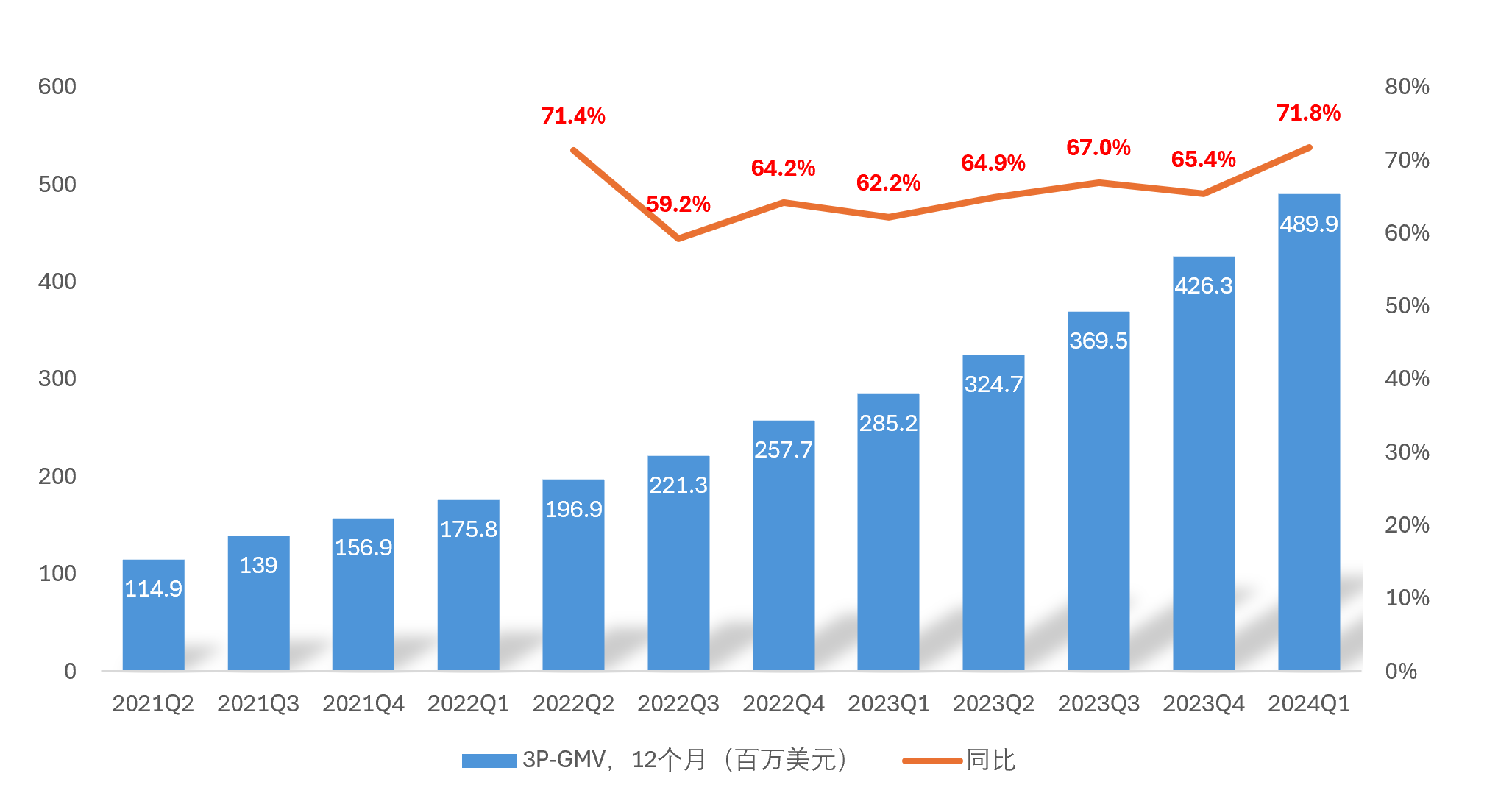
Figure 5. Dajian Yuncang B2B Platform 3P-GMV (in the past 12 months) and its growth rate
Data source: Listed company announcement
From a growth perspective, Dajian's 3P (B2B platform) business currently accounts for a small proportion but has a strong growth trend and has large long-term space. In the past few years, the number of buyers, sellers and GMV have all grown rapidly. We estimate that the penetration of China merchants in Amazon and Wayfair is only more than 10%. There is a strong motivation for the penetration of this business to continue to increase in the future, and it is expected to continue to achieve rapid growth by taking advantage of multiple trends such as the increase in China's furniture exports and the increase in the proportion of furniture e-commerce in the United States. In the long run, Dajian Yuncang has considerable potential to become a pivotal presence in the field of cross-border large-scale trade with its excellent business model and management.
We will continue to track and evaluate the evolution of Dajian Yuncang's competitive landscape and growth prospects.
(Risk warning: 1 Dajian Yuncang's business is greatly affected by cross-border trade policies and policies of e-commerce giants such as Amazon;2 Dajian Yuncang is greatly affected by fluctuations in shipping costs. In special periods such as the soaring shipping costs during the epidemic, Dajian Yuncang's profit margin has dropped significantly;3 The company's market value is small, and price fluctuations can easily deviate from a reasonable position. Recent trading volume fluctuations are a bit excessive;4 The company's field has a trend of intensified competition and needs to be continuously tracked.)
VIII. American Group
"There is no such thing as a long future. What we hear most is a sudden departure. Once brilliant enterprises have come to an end. Star enterprises have fallen to the bottom. Even giant enterprises are facing adjustment. The speed of enterprise replacement has accelerated. Cleaning and clearing have become the norm. The rules of the world are being rewritten. The paradigm of enterprises is shifting. We are trapped in an unprecedented structure. All walks of life are the same. Every individual is the same. We have to say goodbye to fantasies, to the last cycle, to past patterns of thinking, to self-reflection, to self-denial, to inner fortitude, to action."
- Midea Group Annual Report 2023, Fang Hongbo
In 2023, the domestic home appliance industry will continue to forge ahead under multiple challenges. Midea Group withstood the headwinds of the macro environment and industry, achieving revenue of 373.7 billion yuan, a year-on-year increase of 8.1%, and net profit attributable to shareholders of the parent company of 33.7 billion yuan, a year-on-year increase of 14.1%. In the 2024 quarterly report released at the same time, Midea's revenue and profits achieved year-on-year growth of 10% and 12% respectively. At this important juncture of the changing times, Midea's breakthrough and upward approach is to use its own advantages to unswervingly accelerate the expansion of new growth points, including high-end, TOB transformation and going to sea:
With the "COLMO+ Toshiba" dual high-end brand strategy, the overall retail sales of dual high-end brands in 2023 will increase by more than 20% year-on-year;
ToB-end robots, automation systems and other manufacturing revenue was 37.26 billion yuan, accounting for 10%, a year-on-year increase of 24%;
Overseas business accounted for 41%, and gross profit margin was 27.2%, a year-on-year increase of 3.6%, a record high.
These increases came after Midea paid a dividend of 20 billion yuan last year. In other words, after sharing 60% of its net profit, the company can still explore many emerging businesses and achieve double-digit growth!
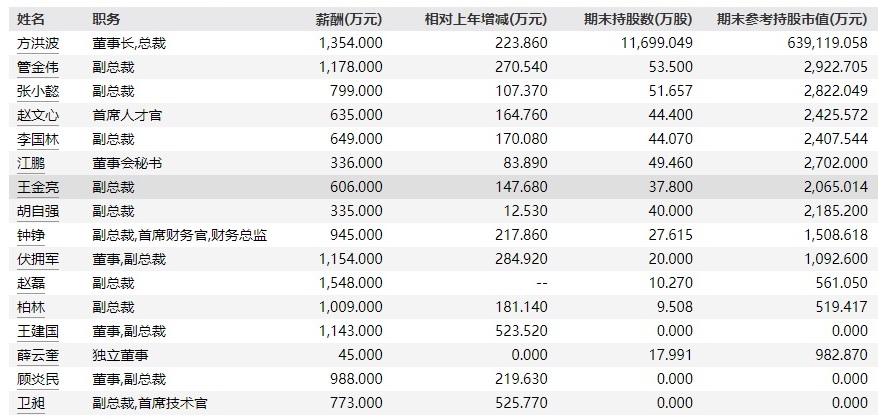
Figure 6. Midea Group's executive compensation and number of shares held
Data source: WIND data platform, listed company announcement
Midea has created a management team matrix of up to 11 vice presidents led by President Fang Hongbo. Not only that, Fang and his senior management team both have high equity bindings. One of them, Zhao Lei, who is only 38 years old, has an annual salary that is even higher than that of President Fang. Many vice presidents have higher salary increases than Fang, such as Wang Jianguo, president of the smart home business group and president of Midea International, and Wei Chang, vice president and chief technology officer. Promote capable talents and give high rewards. It can be seen that the company has a strong performance orientation, a hard-working management culture and a leading talent echelon construction. This may also be the most fundamental driving force and source of its continued development for many years.
Although the pressure brought by the short-term real estate downturn cannot be ignored, Midea has demonstrated good evolutionary ability and long-term doctrine in management and emerging businesses. In the medium and long term, there are also positive factors at home and abroad:
Domestically, the "Action Plan to Promote the Exchange of Old Consumer Goods for New" issued by the Ministry of Commerce and other departments proposes to further increase the market share of high-efficiency and energy-saving home appliances by 2025 by increasing policy guidance and support, and the recycling of used home appliances will increase by 15% compared with 2023; by 2027, the recycling of used home appliances will increase by 30% compared with 2023. For Midea, in the current total sales volume, the demand for scrapping and replacing old appliances with new ones accounts for 60%-65%, and the demand for improvement accounts for 17%-20%; less than 20% of the demand is related to new houses (according to data released by the 2023 Shareholders 'Meeting);
Overseas, the size of the home appliance market is close to US$400 billion, but there are only a handful of global players, especially those with structural advantages. Midea's overseas share is less than 5%, and its future opportunities and growth space cannot be underestimated.
We will continue to track and evaluate the development of Midea in old and new fields.
9. Focus Media
"In the past 20 years, we have not changed to outdoor advertisements such as waiting halls and buses, nor have we moved towards mobile apps. We have always adhered to closed advertising scenarios such as elevator posters, office building posters, shopping mall advertisements, and theater advertisements. But we have also changed. From the PC era to the mobile Internet era, from big data to AI, in every trend, we have applied advanced technology to Focus's core business."
- "Ten Years" column, Jiangnan Chun
In 2023, Focus Media's performance will pick up somewhat, with operating income of 11.9 billion yuan increasing by 26%, and net profit of 4.827 billion yuan increasing by 73%. At the same time, a cash dividend of 4.766 billion yuan is equivalent to achieving growth by dividing almost all profits in cash. What an unbelievable business model!
However, the seemingly outstanding performance is mainly due to the poor performance in 2022 of the previous year, which appears to be high year-on-year. Focus's performance has not yet reached its 2017 high. If calculated based on the average price of media spots, 2023 will drop by 40% compared with 2017. An important reason for such a large gap is that the customer structure in 2023 will be dominated by consumption and big brands, while in 2017 it will be dominated by the Internet and emerging brands. The former tends to mature in its development stage and has stable demand for advertising, while the latter relies heavily on financing and macro and will perform well in a positive environment. For example, Focus in the booming mobile Internet era, and Google and META, the advertising platform companies that have achieved brilliant results in the AI era. We can understand that the current Focus Group has placed itself in a defensive and counterattack state. If the environment warms up and emerging brands in the Internet or AI field counterattack, Focus Group's resilience will also be quite good.
In the long run, the explosive capabilities, scene access, and marketing strategy consultation brought by Focus Media and Jiang Nanchun's team to the brand side are of unique value. Unless people no longer go to office buildings or macro factors continue to disturb, the group that occupies a wide range of high-quality business district resources will still have irreplaceable advantages.
10. Financial and real estate sectors (Ping An of China, China Merchants Bank, Vanke Enterprise, China Resources Land, Longhu Real Estate)
The reason why these five companies are put together is that they all have high leverage embedded in them and are greatly influenced by the macro economy, especially the rise and fall of the real estate industry. To some extent, they are like an "economic beta amplifier" with high odds. Simply put, the logic behind it is to believe that these industries and the top players in the industry will not die out and will still achieve good development after all competitors fall and the cycle has passed. It's like Buffett's bottom-up of Wells Fargo during the California real estate crisis in the early 1990s.
China Merchants Bank adheres to retail and wealth management as its core strategic direction and has good competitiveness in the industry. According to the latest financial report for the first quarter of 2024, China Merchants Bank's core tier-1 capital adequacy ratio reached 14%, making it the highest among domestic listed banks. In terms of risk management and control, China Merchants Bank's non-performing loan ratio is 0.92%, the provision coverage ratio is 454%, and the balance of real estate loans accounts for 4.83% of the total loans. From the perspective of project areas, more than 85% of the balance of real estate development loans is distributed in the Urban area of first-and second-tier cities. In addition, China Merchants Bank is also increasing its dividend yield (dividend yield 5%+). In the current environment, these performances are not easy. For such an excellent bank, the market valuation is 5-6 times its profits over the past 12 months and only 90% of its net assets (for a simple comparison, Buffett's valuation when he purchased Wells Fargo was 4 times P/E and 1 times P/B).
Faced with a complex and ever-changing market environment, China An's performance in many fields can only be said to be unsatisfactory at best. In terms of insurance business, the value of new business increased by 36%, but the value rate of new business at 23.7% is still declining, which is equivalent to a decrease in volume and price. In terms of investment, investment losses (short-term investment fluctuations) reached 32.7 billion yuan, and the company lowered its long-term investment return assumption to 4.5%. Ping An of China has an enviable business model and an enterprising team in the market. Compared with its peers who stick to the rules, Ping An still leads more than one position in insurance reform, medical care and other fields. Ping An also has the most potential to achieve sustained high growth with its strong insurance funds and investment of its own funds, but unfortunately they have not in the past few years. The objective environment is one of the important reasons. After all, insurance is not a necessity, and the investment side suffers from the depreciation of various major types of assets, but subjective factors cannot be ignored. Perhaps the most straightforward highlight now is that as one of the best insurance companies on the market, with a dividend yield of 5%+, the company's current market value is only half of its embedded value.
The real estate industry has encountered unprecedented difficulties. Countless real estate developers have been mired in the quagmire. Three of the former four major companies have defaulted one after another, leaving Vanke alone. Although the market is down sharply, Vanke's sales still outperform the market, and the 2023 annual report settled sales in 2022. According to the latest annual report press conference, the average gross profit margin of new projects since then has been 20%, and the gross profit margin settled in 2024 should be improved. But now this is no longer the main contradiction that the market is concerned about (the market may think that many real estate companies will not survive this year). We don't think real estate will die. This is an important industry related to the national economy and people's livelihood, and it is also the main source of fiscal revenue for local governments. The central and local governments have also introduced many policies to save the housing market. If they still cannot be rescued, we believe that more measures will be introduced. In addition, although house prices and new home sales have experienced sharp declines, transaction volume in the pre-owned housing market has increased significantly. According to data from the Shell Research Institute, the transaction area and amount of second-hand housing nationwide increased by 44% and 30% respectively year-on-year last year. If you add up first-hand houses and second-hand houses, the total sales area and amount in 2023 will also increase by 6.3% and 5.8% year-on-year. It can be seen that the demand for housing is extensive and real. We believe that the top players in a few industries will survive and do well, and these players must have a reasonable debt structure (which players in all industries need), a strong management culture, and incentives that focus on the long term. The current core contradiction of these enterprises is to survive first and show their talents in the next stage.
Special note: Highly leveraged financial and real estate companies are essentially different from the Moutai and Tencent mentioned earlier. As long as the latter leaves a sufficient margin of safety, the probability of long-term losses is extremely low. However, the former may lose money or even lose all principal. So their upward potential must be large enough, the margin of safety when buying must be large enough, and the "most important" buying ratio must not be too high. The advantage of such an investment is that you will only lose twice the amount of money at most, but you may make many times the amount. The same goes for the disadvantages of such investments. Therefore, position control is very critical, otherwise it may be like legendary investor Bill Miller, who left the market sadly after failing to take a heavy position in financial companies such as Citigroup and AIG in 2008.
XI. Summary
In a low-growth environment and under the changes that disrupt technology, how to break through and traverse is an extremely difficult test for every investor. Every time technology rises and falls and every economic crisis, companies will fall and companies will rise. We must admit that among the target companies we focus on, whether they are technology giants, liquor leaders or top real estate students, they have all encountered varying degrees of challenges. What makes us feel gratified is that these companies that pursue excellence have upheld their values while consolidating their competitive positions in difficult environments. They actively embrace change, transform and reform, and use huge dividends and buybacks rarely seen in the market to show confidence in the future when they are extremely pessimistic.
Figure 7. Focus on corporate dividends and repurchase
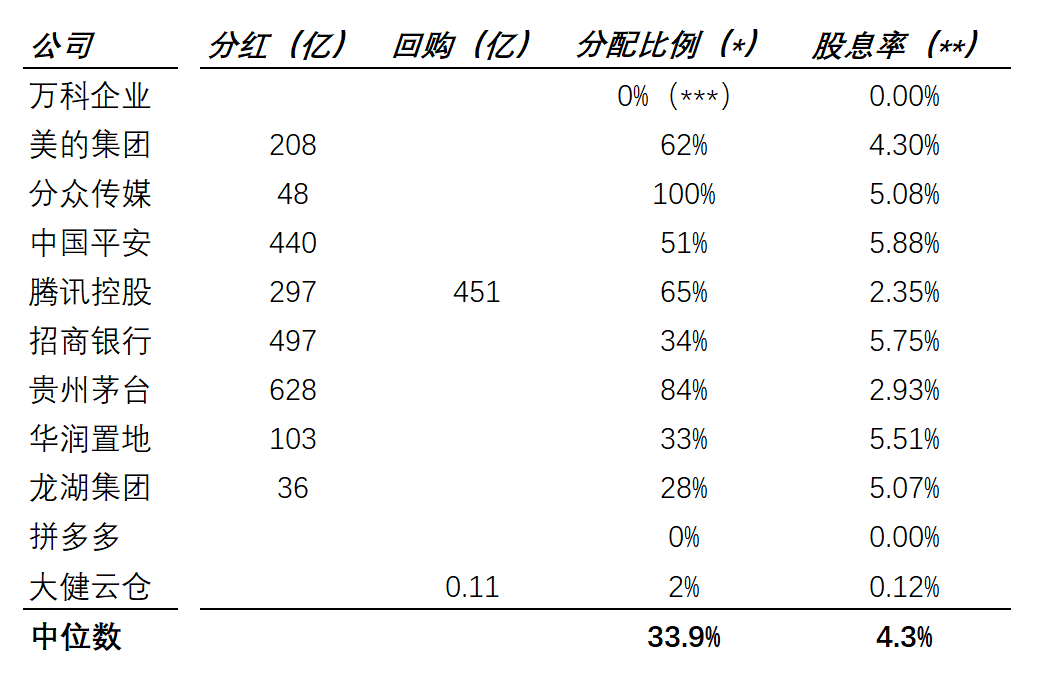
(*) The distribution ratio is calculated as (dividends + repurchase)/net profit
(**) Dividend yield is calculated as (dividends + repurchase)/stock price, and the stock price is based on the closing price on April 30, 2023
(***) Vanke has paid dividends for 31 consecutive years, with a cumulative dividend of 103 billion yuan, with an average dividend rate of 33%, which is 2.8 times that of Vanke's equity financing over the years, but for the first time last year, it did notdividends
We should not be overly pessimistic at this moment. I believe that these talented teams and their passionate entrepreneurial spirit will withstand the impact of the times and make a difference. Finally, we still use a sentence from Midea Group's annual report last year as our summary:
"What traps us is never time and environment, but our mental model. It is also necessary to point the tip of the knife inward, face the problem directly, and hit the water in the middle stream. What can we use to resist the high winds and rough waves, and sail for unknown waters? There is no compass in our hands, but we have common sense and courage."
This memorandum ends here. Thanks to investors for their support and companionship, we have consolidated the cornerstone of our courage to adhere to long-term doctrine and investment philosophy. I also thank readers for taking their precious time to read such a nagging pile of words. If you have any questions, suggestions or criticisms about any content in the memorandum, please send an email to eugene_tu @ belaircapital.com.cn. Thank you so much.
(Special note: The above analysis is only used as an exchange of methods for studying industries and companies in the past year, and does not constitute a recommendation for buying or selling stocks of Kweichow Moutai, Tencent Holdings and other companies. For companies we have followed in the past year or years, we cannot confirm that we will continue to follow under any circumstances in the future.)
Belair Asset Management Co., Ltd.Tu Shiyang
2024/05/15

 Guangdong public network security no. 44000000000000


